
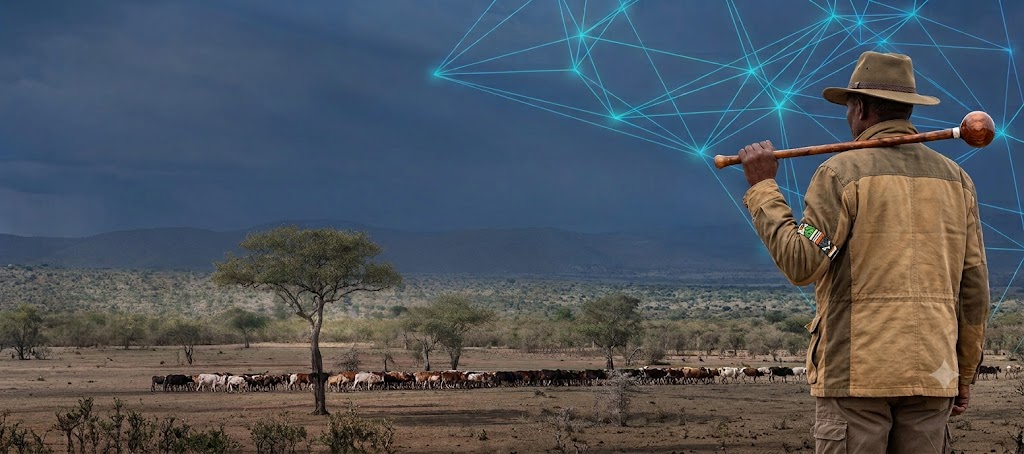
World Day to Combat Desertification and Drought 2026
6 July 2026
Inside the Global Fight to Save Half the Earth’s Land Surface and What It Means for South Africa’s Water Future.
A Crisis Almost Everyone Will Feel.
Every year on 17 June, the world marks Desertification and Drought Day – officially the World Day to Combat Desertification and Drought. According to the Geneva Environment Network, the observance was established by the UN General Assembly in 1994 to commemorate the adoption of the UN Convention to Combat Desertification (UNCCD). It rarely makes headlines the way climate summits or extreme-weather disasters do. Yet according to the United Nations, the land it concerns underpins nearly everything else in the climate conversation, supporting the lives of around two billion people worldwide through food security, water cycles, and biodiversity.
In 2026, the observance carries extra weight. It coincides with the UN’s International Year of Rangelands and Pastoralists, and it precedes UNCCD’s COP17 summit in Ulaanbaatar, Mongolia, in August. As the Network of Excellence on Land Governance in Africa (NELGA) puts it, this convergence creates “a once-in-a-decade moment” for global land policy. According to NELGA, Kenya was chosen to host this year’s global observance in part because rangelands cover roughly 80% of the country and sustain millions of people through pastoralism and livestock.
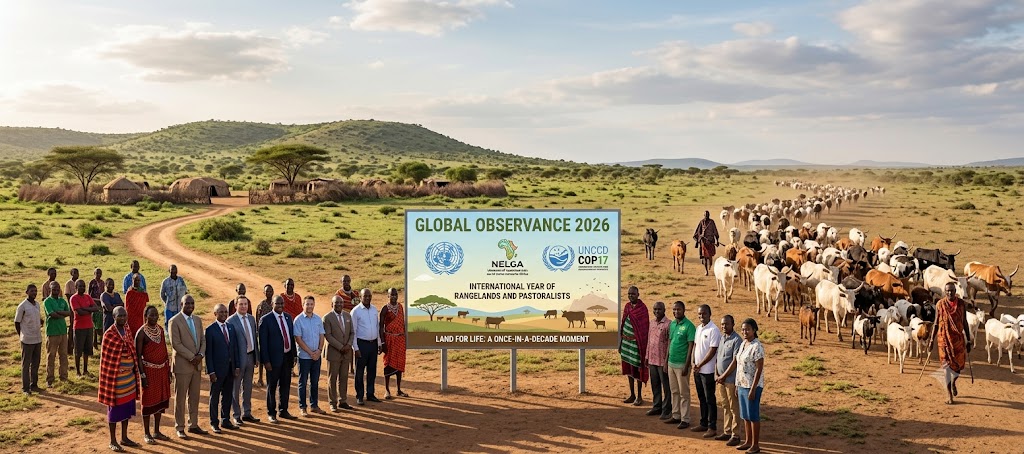
This year’s theme is deceptively simple: “Rangelands: Recognise. Respect. Restore.” Behind those three words lies one of the most overlooked environmental emergencies of our time.
What Exactly Are Rangelands, and Why Should We Care?
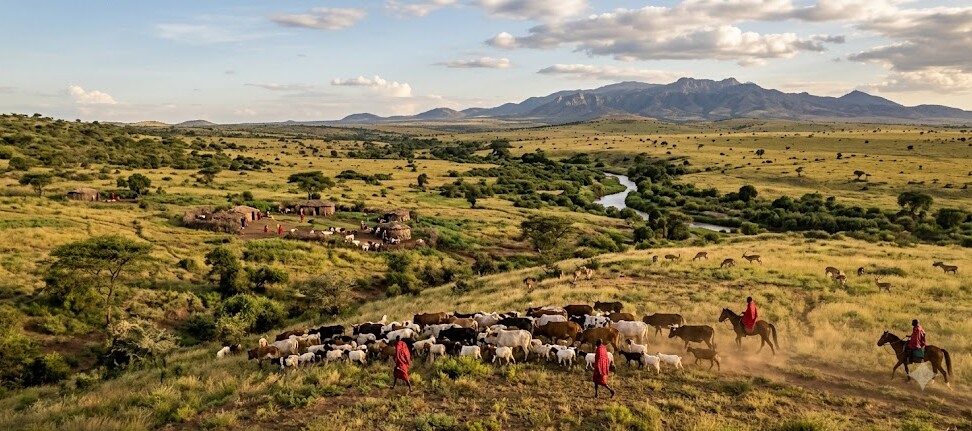
Rangelands are natural and semi-natural grasslands, savannas, shrublands, and drylands used mainly for grazing rather than cultivation. Per the UN’s official Desertification Day page, they are “among the world’s most extensive yet most overlooked ecosystems,” covering more than half of the Earth’s land surface. For millions of pastoralist and Indigenous communities, rangelands are not scenery. These landscapes depend on the mobility, traditional stewardship, and ecological understanding of pastoralists and Indigenous Peoples, whose knowledge is essential to maintaining healthy land over generations.
Yet these ecosystems are in trouble. In his message marking this year’s observance, UN Secretary-General António Guterres warned that “up to fifty per cent of the world’s rangelands are now degraded or at risk,” adding that these conditions “threaten the global food system, harm local livelihoods, reduce biodiversity, and increase greenhouse gas emissions” (as reported by United Nations in Indonesia, 2026). The UNCCD’s own event page for Desertification and Drought Day 2026 confirms the same figure, describing rangelands as “vital for food, water, biodiversity and climate resilience” in the words of UNCCD Executive Secretary Yasmine Fouad.
South Africa’s Position
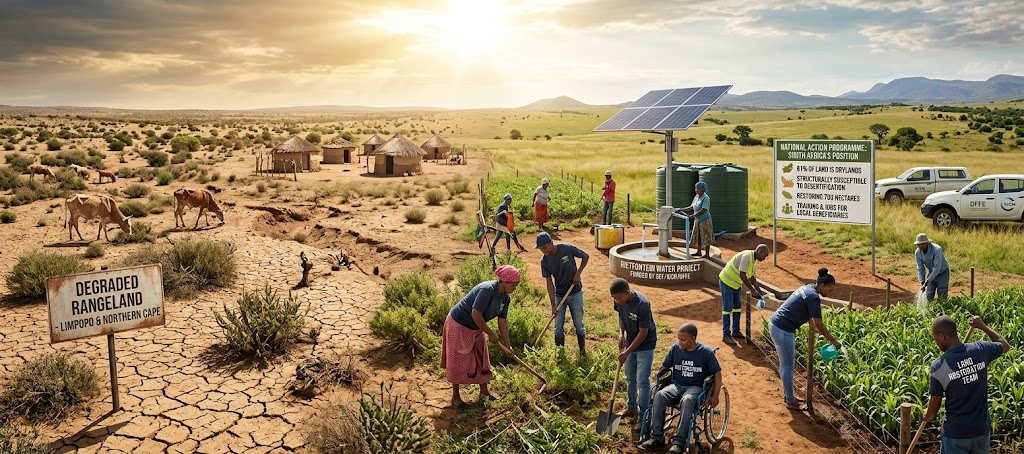
Nowhere is this more relevant than in South Africa. According to the Department of Forestry, Fisheries and the Environment’s National Action Programme, roughly 91% of South Africa’s landscape is classified as drylands, making the country structurally susceptible to desertification. The same report notes that desertification affects approximately 70% of the world’s drylands and that 73% of Africa’s agricultural land is already degraded. Across Southern Africa more broadly, a bibliometric study published in the journal Agriculture found a marked rise in academic and policy attention to communal rangeland degradation over the past decade, tracking 66 relevant publications between 1997 and 2024 (Slayi, Zhou, & Thamaga, 2024).
Field research published in the journal Land examined South Africa’s Grassland, Savanna, and Nama-Karoo biomes and found significant variability in rangeland condition and grazing capacity, driven by drought history, stocking rates, and vegetation shifts with degraded areas often seeing productive, palatable plant species replaced by unpalatable or invasive ones (Land, 2025). A separate, longer-standing study in Environmental Monitoring and Assessment observes that persistent drought has affected the region’s drylands for over a century, and that while rangelands “often recover after the calamity” of a drought if left alone, sustained human occupation has in many cases led to damage that is effectively irreversible (Springer Nature, 2004).
Government agencies are responding. To mark this year’s Desertification and Drought Day, the DFFE highlighted an ongoing partnership with the Department of Agriculture and the International Union for Conservation of Nature (IUCN), funded through the Global Environment Facility, focused specifically on restoring grazing lands in Limpopo and the Northern Cape (as reported by Social TV, 2026). In other areas, land restoration is already delivering results: according to the South African Government News Agency (SAnews), two new boreholes were recently handed over to the drought-affected communities of Rietfontein and Philandersbron tracking 84 local beneficiaries – women, young people, and people with disabilities – received training and jobs through a 700-hectare invasive-plant clearing programme.
That last detail, boreholes as a direct response to drought and land degradation, points to where climate adaptation and water infrastructure intersect most directly.
Why Water Access Is the Front Line of Rangeland Restoration
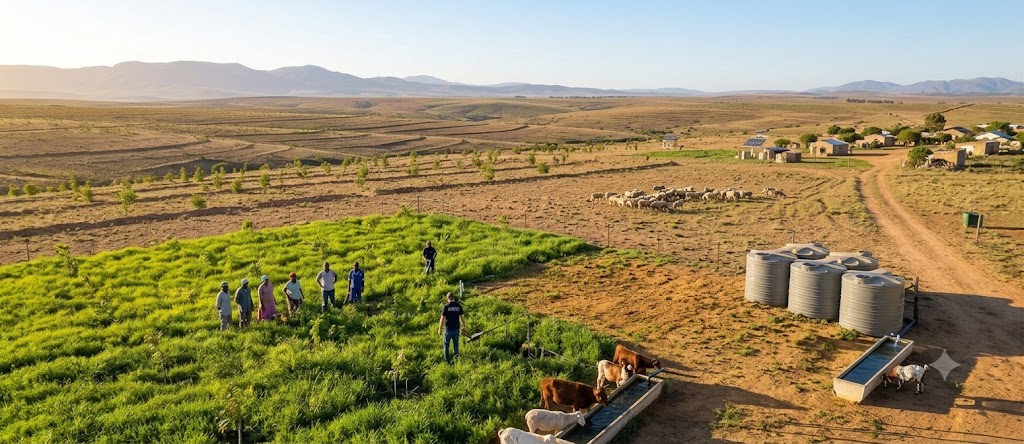
Restoring degraded land is a long-term, multi-decade undertaking involving grazing management, invasive species removal, and governance reform. But communities living through drought right now cannot wait a decade for soils to recover. Their most immediate need is reliable water – for livestock, for irrigation, and for households.
At Apollo Solar Technology, this is the gap our solar water pumping range is built to close. Our systems combine high-performance submersible pumps with efficient photovoltaic arrays and smart controllers, engineered for the realities of rural and off-grid environments – multiple flow-rate configurations to suit household, agricultural, and commercial needs, and durability built for South African conditions. Explore the full range here.
A Balanced View: What Solar Pumping Can and Cannot Fix
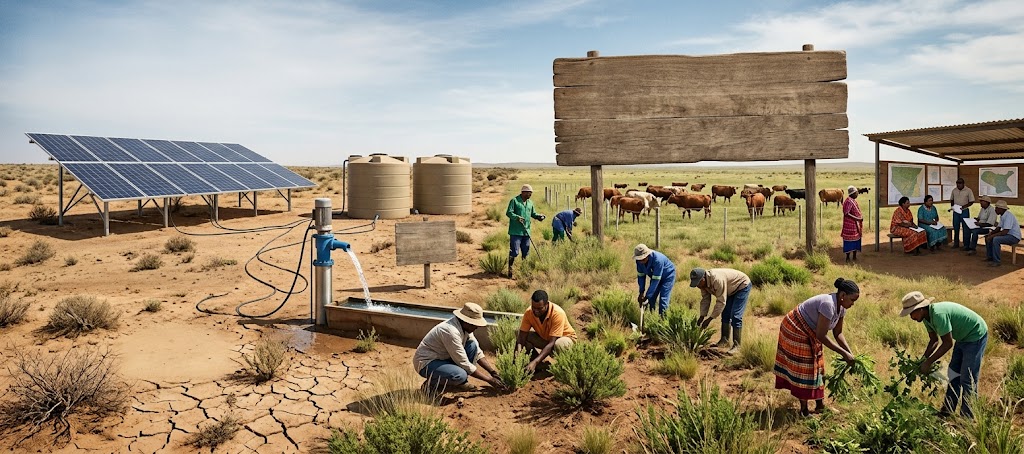
It would be misleading to present solar water pumping as a complete answer to desertification. It isn’t – and no single technology could be. Restoring degraded rangelands requires sustained investment in grazing management, invasive species control, secure land tenure, and the traditional ecological knowledge of pastoralist and Indigenous communities. As the Geneva Environment Network notes, this year’s theme specifically calls on the world to “respect pastoralists, Indigenous Peoples and local communities, whose mobility, customary governance systems and ecological knowledge are essential to maintaining the health and productivity of these landscapes.”
Solar pumping also has real limitations. According to Future Market Insights, the sector’s own growth forecasts flag high initial investment costs, dependence on sunlight availability, and limited energy storage capacity as ongoing constraints on adoption. Without battery storage, systems may need to pause pumping during extended cloud cover. And a borehole pump, however efficient, does nothing to address the underlying overgrazing or vegetation loss driving degradation in the first place- it treats a symptom (water scarcity) rather than the root cause.
What solar pumping does provide is breathing room: a reliable, lower-cost way to secure water while the slower work of land restoration takes place. In that sense, it is best understood as one practical tool within a much larger toolkit that includes policy reform, community governance, and ecological restoration – not a substitute for any of them.
Looking Ahead: COP17 and a Rangeland-Focused Decade
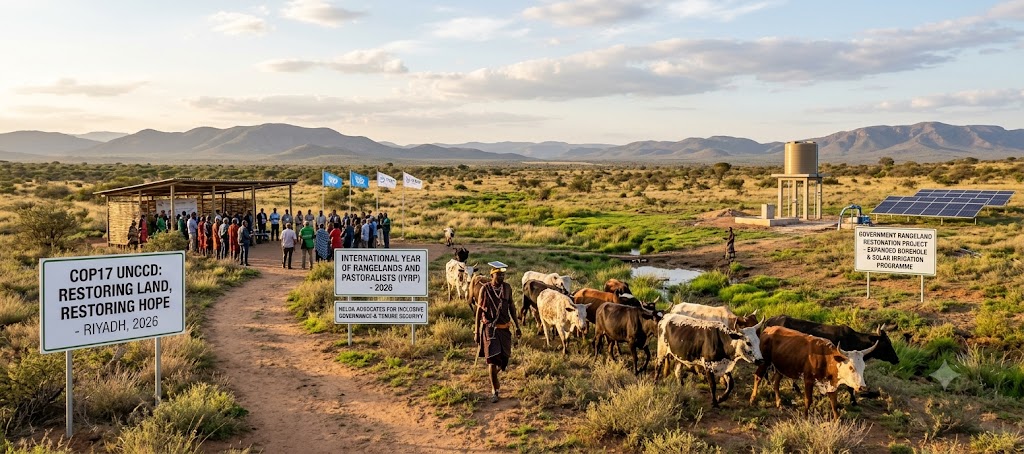
The convergence of events in 2026 – the International Year of Rangelands and Pastoralists, this year’s Desertification and Drought Day theme, and UNCCD’s COP17 conference in August, titled “Restoring Land, Restoring Hope”, signal that rangeland restoration is moving up the global policy agenda rather than fading from it, according to both the United Nations and NELGA. NELGA also points to UNCCD’s December 2024 COP16 decision on rangelands and pastoralists as a turning point, urging countries to prioritise policies and investment for sustainable rangeland management with an emphasis on inclusive governance and tenure security.
For South Africa and the broader Southern African region, where droughts have recurred for over a century and communal rangelands face mounting research and policy attention, the coming years will likely bring further government-backed restoration projects, expanded borehole and water infrastructure programmes, and continued growth in solar-powered irrigation and pumping adoption.
A Landscape Worth Recognising
Rangelands rarely feature in popular conversations about the environment the way rainforests or coral reefs do. They lack the same visual drama. But according to the United Nations, they cover more of the Earth’s surface than any other ecosystem type, sustain the livelihoods of roughly two billion people, and are degrading at a scale – up to half the global total – that ought to alarm anyone who eats food, drinks water, or lives downstream of a changing climate.
This year’s theme asks the world to do two things:
- respect the pastoralist and Indigenous communities who have sustainably managed them for generations,
- and restore what has already been degraded (UNCCD, 2026).
None of those two steps happens without water. And in South Africa’s rural and off-grid communities, solar-powered borehole pumping is increasingly the practical bridge between a degraded landscape today and a restored one tomorrow – proof that climate adaptation, at its most effective, is often less about a single grand solution and more about getting reliable water to the people and land that need it most.
Empowering Tomorrow With Today’s Sun: Illuminate Your World With Apollo Solar Technology


