
#SONA2026: Are South Africa’s dry taps and soaring electricity bills quietly calling for solar solutions?
20 February 2026
When taps run dry and electricity bills keep climbing, businesses and households start looking for alternatives. South Africa’s recent National Address confirmed what many already know: the country’s water and energy challenges aren’t going away anytime soon. But the speech also revealed something else. Government priorities and funding commitments are now lined up in ways that make solar water and power solutions not just attractive, but increasingly necessary.
Water infrastructure and reliability
President Cyril Ramaphosa delivered one of his most critical State of the Nation Addresses since assuming office in 2018, elevating the water crisis to the same level of priority as the energy crisis. The speech made it clear that “water is now the single most important issue for many people in South Africa” and noted frustrations “over inadequate and unreliable access to basic services such as water.”
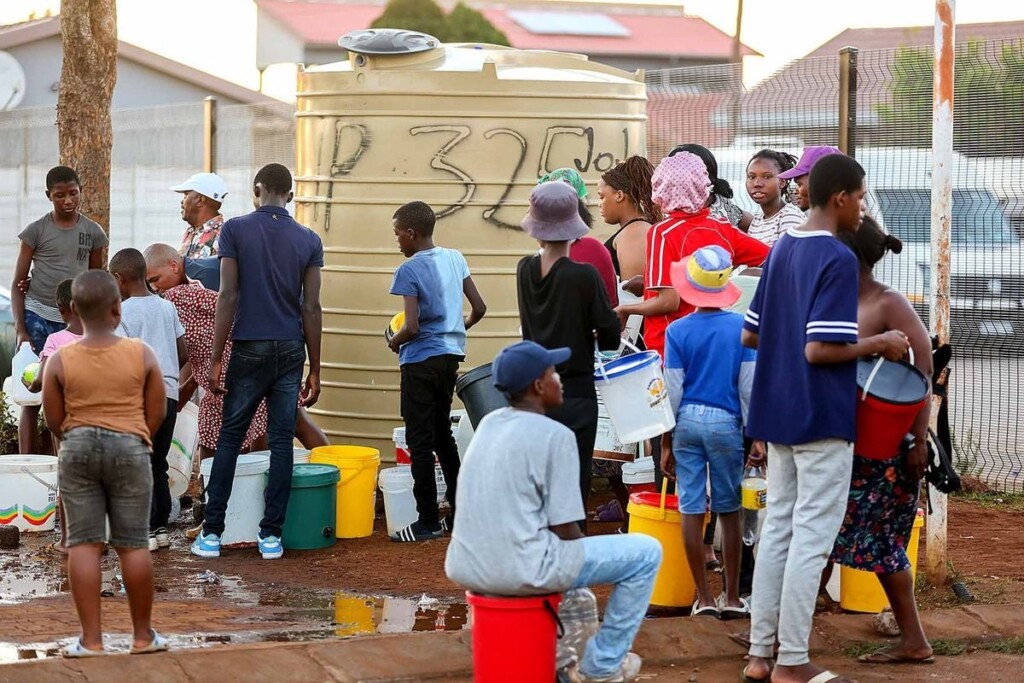
purchase water or pay neighbours to fetch it on their behalf because of continued supply disruptions.
Image © G-Master Newz
In an unprecedented move signaling the severity of the situation, Ramaphosa announced he will personally chair the National Water Crisis Committee to coordinate technical experts and resources. To support these efforts, government has committed more than R156 billion over the next three years to upgrade and expand the country’s water and sanitation infrastructure. one of the largest public investments in the sector in recent years.
The President also outlined major infrastructure projects are already underway, stating: “The construction of the Lesotho Highlands Water Project and other large-scale projects like the Ntabelanga Dam, part of the Mzimvubu Water Project in the Eastern Cape, is advancing.” He also announced that “we are in the final stages of establishing a National Water Resource Infrastructure Agency to effectively manage the country’s water infrastructure and to mobilise funding for water infrastructure.”
Yet the President acknowledged a critical reality: “However, the real challenge lies not in having enough water, but in delivering it to people’s homes.”
To address this delivery gap, sweeping accountability measures were announced. Criminal charges have been laid against 56 municipalities for failing to deliver water, with municipal managers to be charged in their personal capacities for violating the National Water Act.
The Water Services Amendment Bill will be central to these reforms. As Ramaphosa explained: “The Water Services Amendment Bill will enable us to hold water service providers accountable for their performance and withdraw their license if they fail to deliver. If a municipality is not willing or able to provide a service to its residents, it must be done by another structure that can.”
The President also emphasised that “these reforms will address the root causes of the water crisis”; targeting not just infrastructure deficits, but the governance and accountability failures that have left communities without reliable water access.
These commitments point to a broad, long term shift in South Africa’s water sector. Real change will come, but it will not happen overnight. Where municipal supply continues to fall short or remains unreliable, it makes sense to plan beyond the grid and take control at site level. Across the country, more households, farms and businesses are already turning to borehole water to secure a more consistent supply. That shift reflects a simple reality: when taps run dry, people look for solutions they can manage themselves. Solar borehole water pump systems, provide a practical way to maintain immediate access while infrastructure is rebuilt and accountability mechanisms take effect. Off-grid and powered by clean energy, these systems support both residential and commercial water needs – particularly in communities where infrastructure is most stretched or where governance failures have left residents without reliable service. The solutions are all around us; we just need to act on them.
Housing development and community needs
The address also referenced the constitutional right “to progressively realise the right of all South Africans to housing” and highlighted plans to expand affordable housing and support people “to build, buy or rent their own housing.” New housing means new demand for reliable water heating. This expansion represents a critical opportunity to support both affordability and sustainability. But how can affordability and sustainability work together? Solar water heating solutions enable new homeowners to reduce energy costs immediately while supporting the national renewable energy transition. “By integrating solar water heating into new housing developments, Apollo helps ensure South Africa’s housing growth aligns with its clean energy future; delivering immediate savings and long-term sustainability for new residents,” said K. Magidi, Apollo’s Senior Stakeholder Relations Specialist.
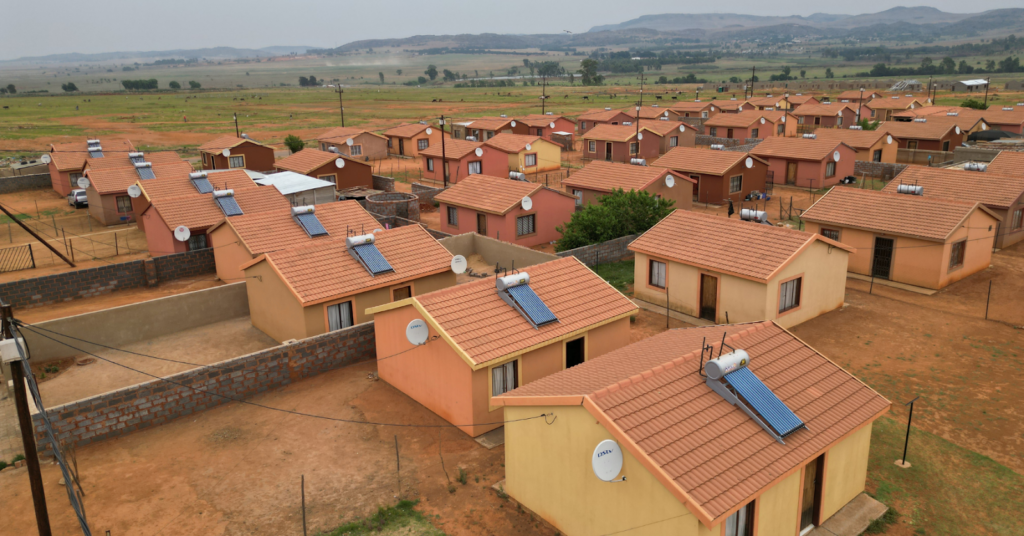
Image © Apollo Solar Technology
Renewable energy and the solar economy
On energy, the speech stated that the government is investing in “wind and solar farms” and that regulatory reforms have “enabled a massive and growing pipeline of investment in renewable energy.” By 2030, “more than 40 percent of our energy supply will come from cheap, clean, renewable energy sources.” This reflects a broad shift towards decentralised and private energy solutions.
As the government invests billions in large-scale renewable infrastructure, Apollo Solar Technology empowers customers to capitalise on the same shift at the household and commercial level. These systems reduce reliance on grid power, lower energy costs, and align individual action with national priorities; turning the government’s renewable energy vision into tangible, immediate benefits for South Africans seeking energy security and sustainability.
Electricity resilience and systems integration
The speech also stated that South Africa has “brought an end to load shedding and built a more dynamic and resilient energy system” and is restructuring transmission to invite private investment. However, while load shedding may have ended, electricity prices remain a significant burden. According to the MyBroadband article, Nersa approved electricity tariff increases of 8.76% in April 2026 and 8.83% in April 2027, continuing to place financial pressure on households and businesses even as grid reliability improves.
The table below outlines the effect of the electricity tariff increases for the 2026 to 2027 and 2027 to 2028 financial years only.
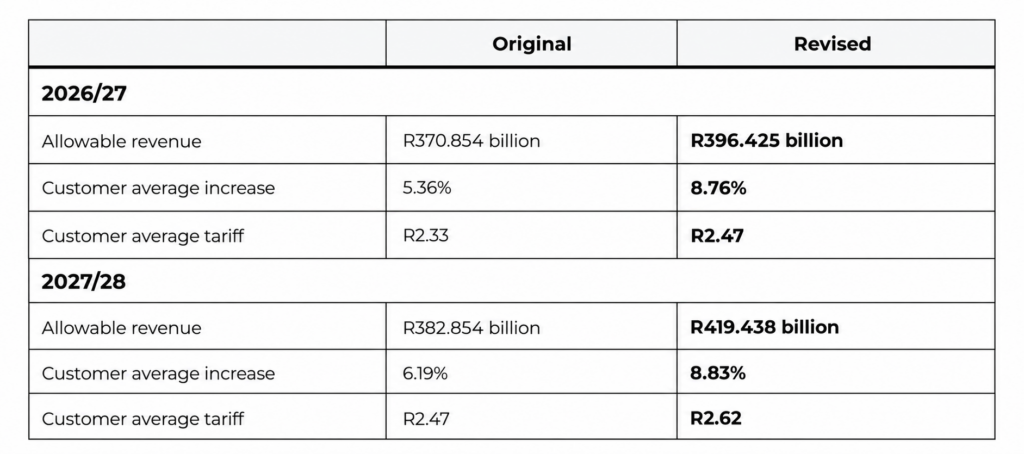
For many South Africans, these tariff increases represent more than just higher bills, they signal ongoing financial uncertainty and vulnerability, particularly for households already stretched thin and businesses operating on narrow margins. The worry isn’t only about affordability; it’s about the lack of control over essential costs that continue to rise regardless of income stability.
Taken together, the government’s commitments to water infrastructure, housing expansion, renewable energy investment and grid modernisation; combined with persistent challenges around service reliability and cost – point to sustained demand for decentralised solar solutions.
Empowering Tomorrow With Today’s Sun: Illuminate Your World With Apollo Solar Technology


